

What is the difference between gas and oil-filled Audi shock absorbers?
Jan 12, 2026
Leave a message
As a specialized supplier of Audi shock absorbers, I've witnessed firsthand the diverse preferences and questions from our customers. One of the most frequently asked questions revolves around the difference between gas and oil - filled Audi shock absorbers. In this blog, I'll delve into the technical aspects, performance characteristics, and practical implications of these two types of shock absorbers to help you make an informed decision.
Technical Structure and Working Principle
Oil - filled Shock Absorbers
Oil - filled Audi shock absorbers operate on a relatively straightforward principle. Inside the shock absorber, there is a piston that moves through a chamber filled with hydraulic oil. When the vehicle encounters a bump or uneven road surface, the piston moves, forcing the oil to flow through small orifices and valves within the shock absorber. This movement of the oil creates resistance, which helps to dampen the vertical movement of the vehicle's suspension.
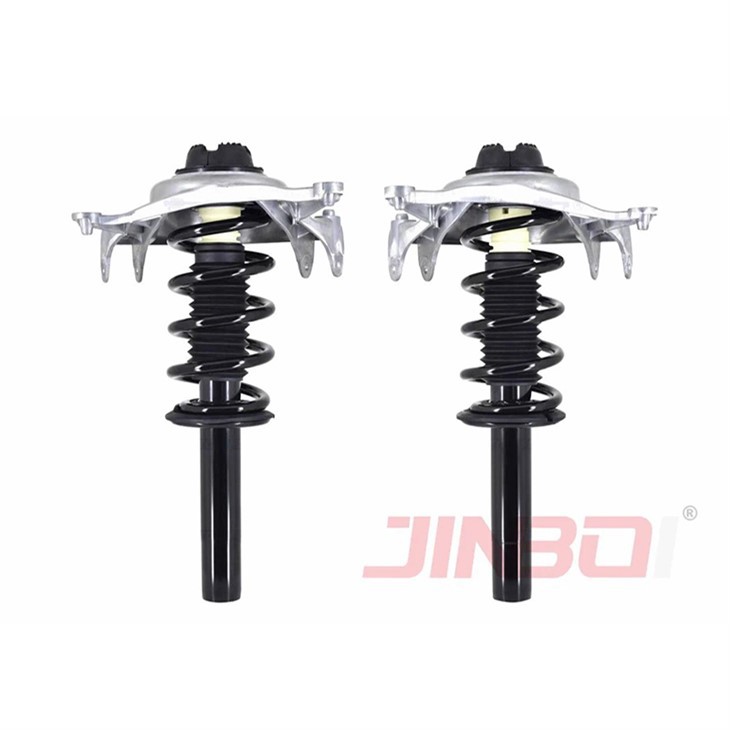
The design of oil - filled shock absorbers is relatively simple, consisting of a cylinder, piston, valves, and the hydraulic oil. The valves in an oil - filled shock absorber are crucial as they control the flow of oil and determine the damping characteristics. These valves can be adjusted to provide different levels of stiffness, depending on the specific requirements of the Audi model.
Gas - filled Shock Absorbers
Gas - filled Audi shock absorbers, on the other hand, have a more complex design. In addition to the hydraulic oil, they also contain a pressurized gas, usually nitrogen, separated from the oil by a floating piston or diaphragm. The gas serves several important functions.
The presence of the pressurized gas helps to reduce foaming of the hydraulic oil. When the shock absorber is working hard, such as during high - speed driving or on rough roads, the rapid movement of the piston can cause the oil to foam. Foaming reduces the effectiveness of the shock absorber as it becomes compressible, leading to a loss of damping force. The pressurized gas in a gas - filled shock absorber compresses and expands to absorb the pressure changes, preventing foaming and maintaining consistent damping performance.
Performance Characteristics
Ride Comfort
Oil - filled shock absorbers are generally known for providing a smoother and more compliant ride on normal roads. The relatively gentle damping characteristics of oil - filled shock absorbers allow the suspension to absorb small bumps and vibrations without transmitting them harshly to the vehicle's cabin. This makes them a popular choice for Audi vehicles used primarily for daily commuting and city driving, where ride comfort is a top priority.
Gas - filled shock absorbers, however, offer better control over larger bumps and more aggressive driving maneuvers. The pressurized gas provides a more immediate and firm damping response, which can help to keep the vehicle's body more stable during cornering, braking, and acceleration. While they may transmit a bit more vibration to the cabin compared to oil - filled shock absorbers, they are often preferred by drivers who enjoy a sportier driving experience or need better handling performance, such as on a race track.
Durability and Performance in Extreme Conditions
Gas - filled shock absorbers tend to have better durability, especially in extreme conditions. The pressurized gas helps to prevent the shock absorber from overheating and reduces the wear and tear on the internal components. This makes them more suitable for heavy - duty use, off - road driving, or high - performance applications where the shock absorbers are subjected to a lot of stress.
Oil - filled shock absorbers may be more prone to overheating and foam under extreme conditions, which can lead to a decrease in damping performance over time. However, they are still a reliable option for normal driving conditions and can provide satisfactory service life if used within their design limits.
Handling and Stability
In terms of handling and stability, gas - filled shock absorbers have an edge. The faster response time of gas - filled shock absorbers allows them to quickly adapt to changes in road conditions and vehicle dynamics. This helps to keep the tires in contact with the road surface, improving traction and reducing body roll. As a result, Audi vehicles equipped with gas - filled shock absorbers can generally offer better cornering ability and overall stability at high speeds.
Oil - filled shock absorbers, while still contributing to the vehicle's handling, may not provide the same level of responsiveness and tight control over the suspension movement. They are more focused on providing a comfortable ride, which may come at the expense of some handling precision.
Practical Considerations
Cost
Oil - filled shock absorbers are typically less expensive than gas - filled shock absorbers. The simpler design and manufacturing process of oil - filled shock absorbers result in a lower production cost, which is then reflected in the price. This makes them a more budget - friendly option for Audi owners who are looking for a cost - effective replacement for their shock absorbers.
Gas - filled shock absorbers, with their more advanced technology and better performance characteristics, come at a higher price point. However, for many drivers, the additional cost is justified by the improved handling, durability, and performance they offer.
Compatibility
When choosing between gas and oil - filled shock absorbers for your Audi, it's important to consider the compatibility with your vehicle's suspension system. Some Audi models are specifically designed to work best with either gas or oil - filled shock absorbers. For example, high - performance Audi models may be optimized for gas - filled shock absorbers to take full advantage of their handling capabilities.
Before making a purchase, it's recommended to consult your vehicle's owner's manual or a professional mechanic to ensure that you select the appropriate shock absorbers for your Audi.
Conclusion
In summary, the choice between gas and oil - filled Audi shock absorbers depends on your driving style, the type of roads you typically drive on, and your budget. If you prioritize a smooth and comfortable ride for daily commuting, oil - filled shock absorbers may be the better option. On the other hand, if you enjoy a sporty driving experience, need better handling performance, or frequently drive in extreme conditions, gas - filled shock absorbers are likely to be more suitable.
As an Audi shock absorber supplier, we offer a wide range of both gas and oil - filled shock absorbers to meet the diverse needs of our customers. If you are looking for Audi Q5 Shock Absorbers or other Audi shock absorber models, we have the expertise and products to provide you with the best solution.
If you have any questions or are interested in purchasing our Audi shock absorbers, please don't hesitate to contact us. We are here to assist you in making the right choice for your vehicle.
References
- Bosch Automotive Handbook, 8th Edition
- SAE International Technical Papers on Vehicle Suspension Systems
- Audi Technical Service Manuals